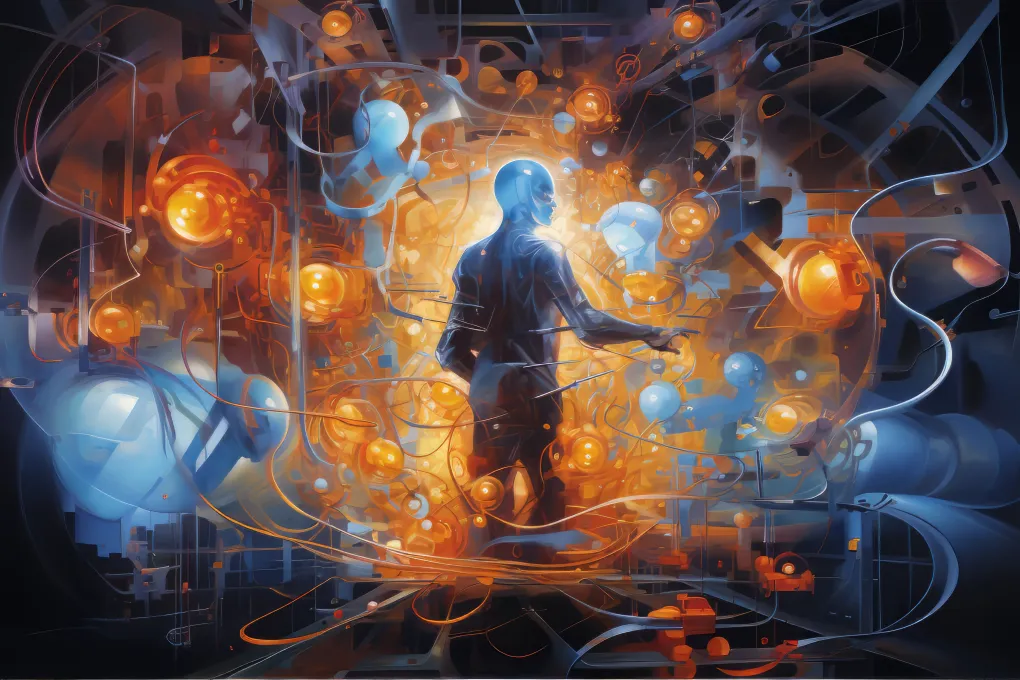
AI and Quantum Physics: Unlocking the future of science

AI and Quantum Physics
Introduction
The convergence of Artificial Intelligence (AI) and Quantum Physics is more than a technological trend—it is the foundation of the next scientific revolution. While AI excels at pattern recognition and data-driven predictions, quantum mechanics governs the fundamental behavior of particles at the smallest scales of reality. Together, they hold the potential to solve problems that were once considered impossible.
AI in quantum research
-
Quantum mechanics produces enormous amounts of complex data that classical methods struggle to interpret. AI is now being used to:
-
Detect hidden quantum states in experiments
-
Optimize quantum algorithms
-
Predict quantum material properties
-
Assist in quantum error correction for more stable quantum computers
-
By leveraging machine learning, scientists can accelerate discoveries that would take decades using traditional approaches.
Quantum computing and AI synergy
Quantum computers have the theoretical capability to perform calculations millions of times faster than classical supercomputers. When combined with AI, this synergy could lead to breakthroughs in:
-
Drug discovery by simulating molecular interactions at quantum levels
-
Climate modeling with unprecedented precision
-
Financial systems optimization across global markets
-
Cryptography with both unbreakable quantum encryption and new AI-driven security challenges
This is not just incremental progress—it is exponential transformation.
Challenges ahead
Despite the promise, merging AI and quantum physics faces challenges:
-
Quantum hardware is still in its infancy
-
Quantum error correction remains a major barrier
-
Training AI to handle probabilistic quantum states is fundamentally different from classical data processing
However, global investment and research are rapidly pushing the boundaries of what is possible.
The future outlook
The collaboration of AI and quantum physics may lead to the creation of artificial general intelligence (AGI) and the development of new physical theories. Imagine AI systems running on quantum computers that can simulate entire universes, test fundamental laws of nature, or discover new dimensions of physics.
Conclusion
AI and quantum physics together represent the ultimate frontier of knowledge. While AI helps us understand and harness quantum behavior, quantum computing provides the computational power AI needs to evolve beyond its current limitations. This partnership will likely redefine not only technology but also human understanding of reality itself.